

Nearly 700 schools have been referred to HSE over concerns they are failing to safely manage asbestos in their buildings, potentially putting thousands of staff and pupils at risk, it has been revealed.
News
Asbestos risk to children and teachers in 676 UK schools
By
on 20 August 2019
Last year, the government launched its ‘asbestos management assurance process’, which asks schools to declare if they are compliant with their legal duty to manage asbestos on their sites. Of the 2,952 schools that responded to the survey issued, 2,570 (87 per cent) reported having asbestos in at least one of their buildings.
Of these, 676 have been referred by the Department for Education (DfE) to HSE as they did not provide evidence “that they were managing asbestos in line with regulatory requirements”.
The story reported in the Guardian on 4 July is based on a freedom of information (FOI) request obtained by campaigner Lucie Stephens.
It follows statistics released by HSE in the same week, which found that in 2017 there were 2,523 deaths from mesothelioma, a cancer in the lining surrounding some of the bodies’ organs caused by inhaling asbestos fibres.
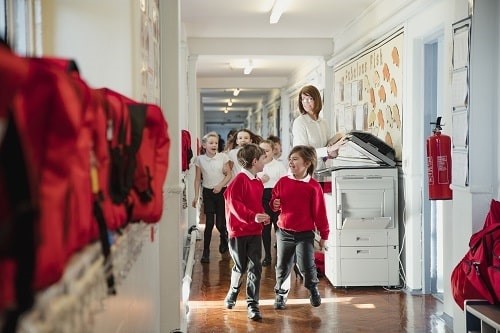 87 per cent of schools the government surveyed reported having asbestos in at least one of their buildings
Stephens, whose mother, a teacher, died from mesothelioma, is petitioning government for the phased removal of all asbestos from schools by 2028. “Mum believes she was exposed to asbestos in the schools she taught in,” she writes on 38 degrees.org, where over 123,000 people have signed her petition.
“Before she died I promised her that I will do my best to make sure no one else has to suffer like she has.”
The National Education Union (NEU) says teachers are dying from mesothelioma at an average of 17 per year, and that pupils are at risk. Kevin Courtney, the joint general secretary of NEU commented of the FOI: “The lives of thousands of staff and pupils could be at risk in these schools.
“The HSE, which lacks resources following years of budget cuts, will now be expected to investigate these cases and we are concerned that it may struggle to do so.”


NEWS

British Safety Council calls on UK Government to ban silica-containing materials
By British Safety Council on 20 August 2026
British Safety Council has called on the UK Government to ban the import and export of high silica-containing products within the next five years to protect workers from the risks associated with high-concentration silica-containing materials.

Mates in Mind launches free suicide prevention training for construction workers
By Thomas Tevlin on 13 August 2026
Mental health at work charity Mates in Mind has launched new digital training aimed at increasing awareness and reducing suicide amongst sole traders and self-employed construction workers to support World Suicide Prevention Day on 10 September.

Hidden Hazards. Recognise Risks. Protect Lives
By British Safety Council on 30 July 2026
British Safety Council launches new flagship campaign to shine a light on hidden hazards in the workplace.