Learning that saves lives
Success can sometimes be a problem. The better we become at preventing incidents, the harder it can be to see what is actually preventing them.
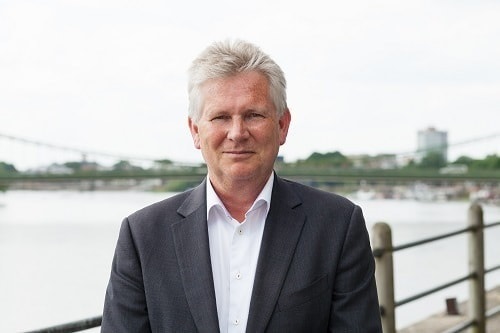
By Mike Robinson, chief executive, British Safety Council on 11 September 2026
Success can sometimes be a problem. The better we become at preventing incidents, the harder it can be to see what is actually preventing them.
By Mike Robinson, chief executive, British Safety Council on 11 September 2026
Migraine can have a profound, and often avoidable, impact on people’s working lives and careers. The Government’s growing focus on workplace health offers an important opportunity to change this, but only if this common, often disabling and frequently invisible neurological condition is properly understood and addressed by Government, the NHS and employers.
By Rob Music, The Migraine Trust on 07 September 2026
With rising temperatures posing a growing health risk to UK workers, the TUC is calling for HSE guidance to be updated to require employers to take specific steps to protect workers' wellbeing when temperatures exceed pre-set trigger points.
By Huma Haq, TUC on 01 August 2026
UK efforts to tackle air pollution have focused almost exclusively on public health and outdoor air quality, meaning the risks to workers from poor indoor air quality in workplaces have been seriously neglected.
By Graham Petersen, Trade Union Clean Air Network (TUCAN) on 15 April 2026
PFAS pollution is a rapidly growing concern in the UK. PFAS are widespread in the UK’s environment, wildlife, and people and research shows that the cost of cleaning up PFAS in the UK is astronomical. The question is, what is the government currently doing to address these issues, and is it enough?
By Dr Shubhi Sharma, CHEMTrust on 15 April 2026
With growing evidence of rising cases of asbestos disease among people working in buildings containing asbestos, it is clear the existing strategy of managing asbestos-containing materials ‘in situ’ is failing, and a comprehensive programme of removal must be adopted as quickly as possible.
By Charles Pickles, Airtight on Asbestos on 02 April 2026
PFAS (per- and polyfluoroalkyl substances), also known as ‘forever chemicals’, present significant long-term environmental, human health and economic threats for the UK.
By Megan Kirton and Heather McFarlane, Fidra on 01 April 2026
Health and safety professionals are uniquely placed to help businesses meet ever-increasing sustainability challenges, but a new survey suggests they need to rapidly expand their knowledge of the relevant regulations, risks and technical practices if they are to effect real change within organisations.
By Lisa Pool, Institute of Sustainability and Environmental Professionals (ISEP) on 17 March 2026
The Office for Environmental Protection is an independent body set up to hold government and public authorities to account for their environmental commitments. A key part of its remit is to annually assess how government is progressing against its legally binding environmental targets and goals in its Environmental Improvement Plan (EIP). The EIP is regarded as government’s roadmap on how it will restore England’s environment.
By Professor Robbie McDonald, Office for Environmental Protection on 17 March 2026
With England facing a 6 billion litres per day water supply shortfall by 2055 and the water sector undergoing its biggest reform since privatisation, business has an essential role in demand and efficiency to ensure resilient future supplies.
By Tamara Walters, Waterwise on 17 March 2026
ESG metrics are intended to show how a business operates in a world defined by volatility and change. Do the actions of an organisation support the long-term survival of both people and planet? Are actions genuinely grounded in mission and purpose? Do words and deeds seek to meet the same ends?
By Mike Robinson FCA, British Safety Council on 12 March 2026
The announcement that a group of ‘Vanguard’ employers will work with the Government to identify the most effective ways businesses, the health service and employees can work together to support people experiencing ill health to remain in and return to work provides a great opportunity to pilot a new National Occupational Health Service offering universal access to high-quality occupational health support for all workers and employers.
By Sasjkia Otto, the Fabian Society on 09 March 2026
Although non-compliance with environmental, safety and social responsibility laws and duties can prove extremely costly in terms of fines and reputational damage, businesses that prioritise excellent environmental, social and governance standards can reap a variety of financial and related benefits.
By Emma Tattersdill and Emma Evans Bexley Beaumont law firm on 05 March 2026